When Faith Turns to Flesh
Genesis 16 opens with a delay not of faith, but of manifestation. “Now Sarai… bare him no children: and she had an handmaid, an Egyptian, whose name was Hagar.”
The pain of waiting creates the temptation to help God.
Sarai’s decision wasn’t random it was a flesh-driven response to a divine delay.
Sometimes what looks like a solution is actually a shortcut to sorrow.
Abram consents. Hagar conceives. But what Sarai thought would bring peace now brings strife.
Impatience makes you birth what God never authored.
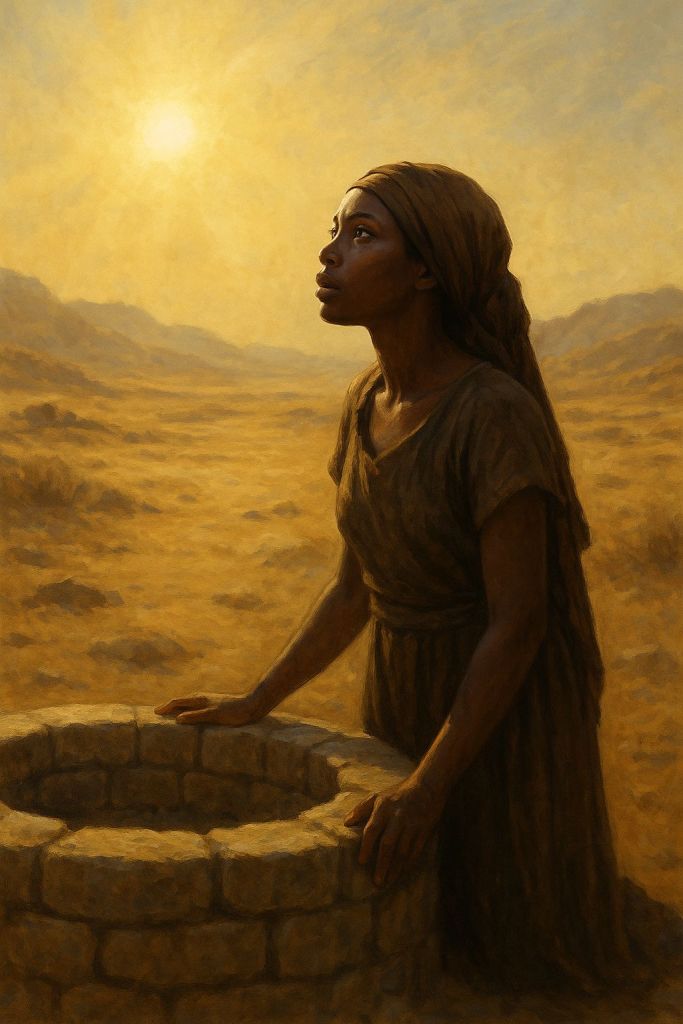
Yet, when Hagar flees, God meets her at the fountain.
He says, “Return… submit… I will multiply…”
This shows that even when man mismanages, God still redeems.
And for the first time in scripture, a name is given to God: “Thou God seest me” El Roi.
Genesis 16 teaches that even rejected people encounter redemptive mercy because God sees the wounded, not just the obedient.
Unauthorised Prophecy and Illegitimate Priesthood
The chapter is a case study in unauthorised intercession.
Sarai creates an alternative womb for prophecy but the Spirit realm does not endorse it. The child (Ishmael) is a biological success but a spiritual misalignment.
This reveals something vital:
Not every manifestation is a validation of divine backing.
Abram never consulted God. Sarai used human logic. Hagar submitted but then despised.
This is a triangular error, producing a lineage that warred against destiny.
God, however, does not kill Ishmael. He speaks into his future: “He will be a wild man; his hand will be against every man…” This is not a blessing it’s a prophetic diagnosis of the consequences of unauthorised prophecy.
Genesis 16 teaches us: You can’t use flesh to fulfil spirit. What’s born of the bondwoman shall always persecute what’s born of promise.
The Womb, The Wound, and the Well
Genesis 16 is a woman’s war Sarai, driven by barrenness; Hagar, provoked into pride.
Sarai says to Abram, “I pray thee, go in unto my maid…”
It sounds submissive, but it’s a misplaced prophetic delegation. Then Hagar conceives but conceiving without covenant creates conflict.
She who once served now despises.
She who was barren now blames.
Sarai says to Abram, “My wrong be upon thee!” But Abram stays silent, which shows the absence of spiritual headship.
Hagar flees and ends up at the well in the wilderness. The place of rejection becomes the location of divine encounter.
God says, “Return and submit…” Then gives a prophetic word over her child proof that God sees every womb, even when others don’t.
Genesis 16 is a story of women one wounded by delay, the other wounded by pride both in need of El Roi, the God who sees.
Genesis 16 teaches:
Impatience opens the door to unnecessary warfare.
What you birth outside of God may live but it will fight what’s inside God.
Every Hagar has a fountain moment a place where God sees, speaks, and redirects.
Spiritual authority must not stay silent during moments of prophetic confusion.
God’s mercy covers mistakes but truth demands return and submission.
Declarations:
I will not birth Ishmael while waiting for Isaac!
My womb will wait on God’s Word, not man’s timeline!
Every decision I made out of pressure Lord, redeem and realign it!
I dwell under the gaze of El Roi I am seen, known, and restored!
Every well in my wilderness becomes a fountain of vision!
In Jesus name

Leave a comment