BeKemified – Pampered. Prepared. Positioned.

Pampered by Grace. Prepared by Truth. Positioned for Glory.

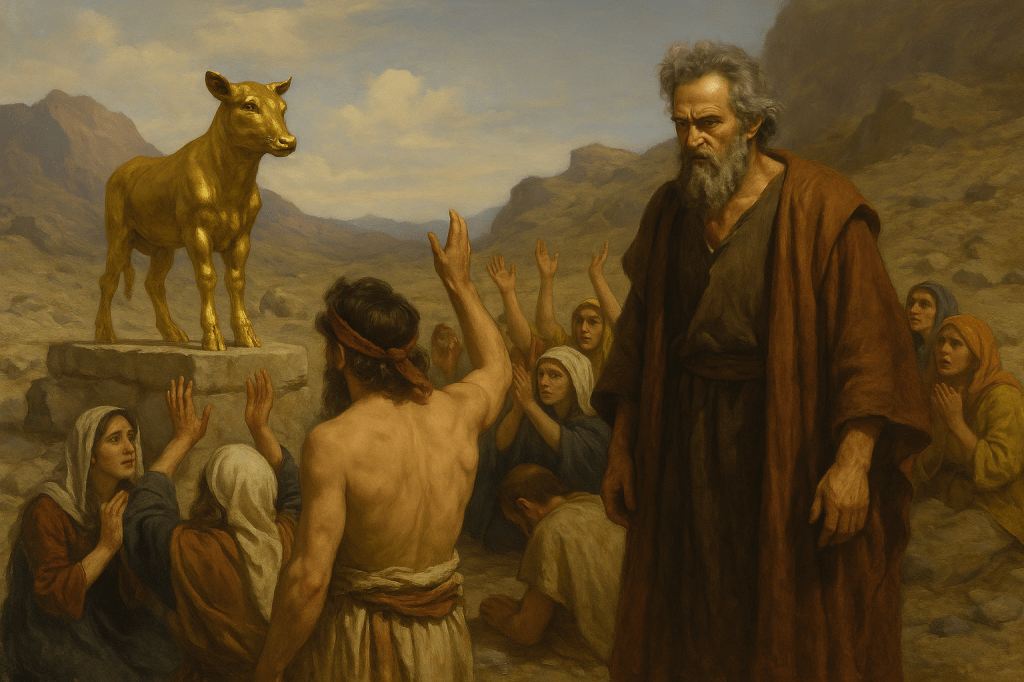
  • Exodus 32 reveals how quickly the human heart drifts when waiting feels like delay. While Moses communes with God on Sinai, Israel crafts a golden calf, trading revelation for visibility, presence for performance. This chapter is a sobering reminder: without patience and purity, worship mutates into idolatry.

    Impatient Faithfulness: The Subtle Fall of Powerless Worship

    “Make us gods which shall go before us.” – Exodus 32:1

    When God’s timing feels too long, man’s hands rush to create a substitute. The golden calf was not a rejection of God but a distortion of Him. They wanted something they could see and control.
    Impatience is idolatry in disguise. When trust expires, creativity turns carnal.
    Faith that cannot wait will always build its own god.

    Aaron’s Compromise: Leadership Without Conviction

    “And he received them at their hand… and made it a molten calf.” – Exodus 32:4

    Aaron bowed to pressure. Instead of standing firm, he shaped what the people desired. Leadership without backbone becomes partnership with rebellion.


    A leader who fears rejection will always manufacture what the crowd demands.


    Priesthood without principle feeds the golden calves of culture.

    The Consuming Fire: God’s Holy Anger

    “Now therefore let Me alone, that My wrath may wax hot against them.” – Exodus 32:10

    God’s wrath is not rage; it is passion for purity. His fire defends the covenant.
    Even in anger, He offers Moses a choice to intercede, not abandon.


    Divine anger is redemptive, not reactive. It burns away compromise to preserve covenant.


    Sin is not just a mistake, it’s a betrayal of relationship.

    Moses’ Intercession: The Weight of Spiritual Leadership

    “Yet now, if Thou wilt forgive their sin… and if not, blot me, I pray Thee, out of Thy book.” – Exodus 32:32

    Moses stands between mercy and judgment, offering himself as ransom.
    Here, leadership becomes intercession, a heart willing to carry what others deserve.


    True authority is proven in prayer, not position.
    When others break covenant, the mature stand in the gap instead of walking away.

    Consecration Through Judgment: The Levites’ Separation

    “Then Moses stood in the gate of the camp, and said, Who is on the Lord’s side?” – Exodus 32:26

    The Levites respond, separating themselves from corruption. Their obedience earns them priesthood.


    Holiness always involves a choice. The line between loyalty and compromise is drawn in moments of crisis.

    Declarations

    I refuse impatience; I wait on God’s perfect timing.
    My loyalty is to the invisible yet faithful God.
    I reject every golden calf that demands my worship.
    The consuming fire of God purifies my heart and my service.
    I stand on the Lord’s side, set apart, steadfast, and Spirit-filled.
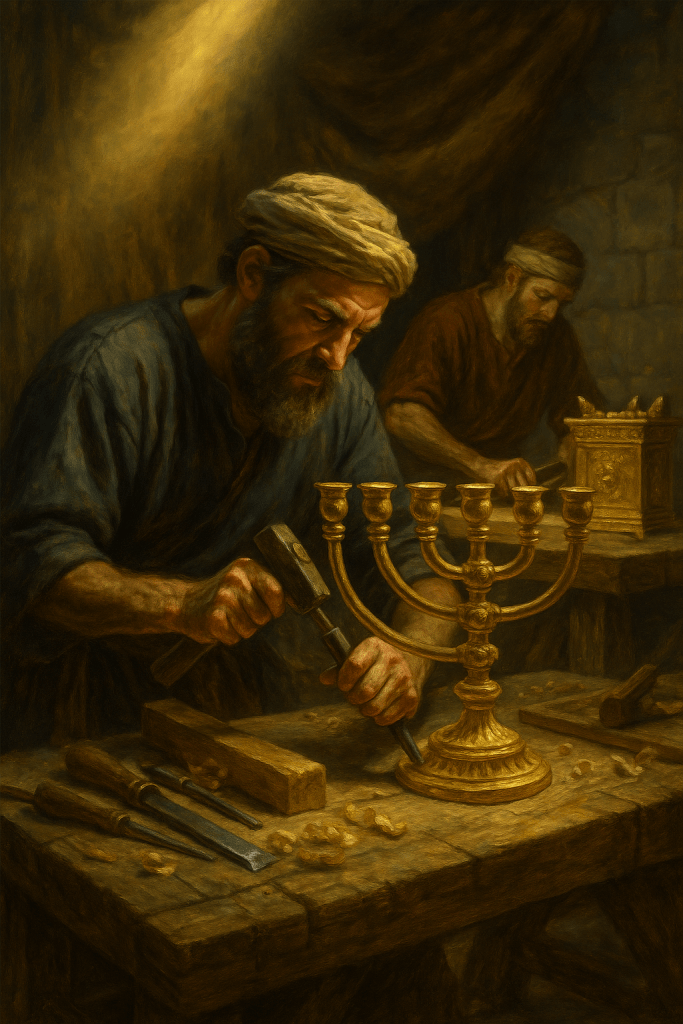
  • Exodus 31 captures divine partnership between inspiration and rest. God empowers Bezalel and Oholiab with His Spirit to build what Moses saw on the mountain. Skill and revelation unite, showing that creativity is as spiritual as prophecy when it flows from obedience. Then, God closes the chapter by commanding the Sabbath, proving that holy work must spring from holy rest.

    Bezalel & Oholiab: Anointed for Assignment

    “I have filled him with the Spirit of God, in wisdom, in understanding, and in knowledge, and in all manner of workmanship.” – Exodus 31:3

    God personally appoints craftsmen filled with His Spirit to manifest His design. Bezalel’s name means “in the shadow of God,” showing that divine creativity thrives under divine covering.

    Insight:
    Inspiration is heaven’s idea meeting human hands. Revelation becomes tangible through Spirit-led skill.

    Principle:
    Anointing isn’t just for preaching, it’s for producing. Every divine purpose needs hands that can interpret heaven accurately.

    Spirit-Filled Workmanship: The Art of Glory

    Crafting the Tabernacle was not artistic expression; it was sacred execution. The Spirit guided every measurement, texture, and metal.
    Creativity, when sanctified, becomes worship.
    Architecture isn’t invention, it’s obedience shaped into form. Glory requires precision, not improvisation.
    Every calling needs Spirit-filled craftsmanship, order, discipline, and beauty as expressions of divine excellence.

    The Sabbath: Power Through Pause

    “Verily my Sabbaths ye shall keep: for it is a sign between Me and you.” – Exodus 31:13

    After the command to create, God commands rest. The Sabbath is a sign that creation belongs to the Creator. Holy rest protects holy work.
    When your rhythm ignores rest, your revelation will eventually distort. Productivity is sustained through pause.
    Rest is not retreat: it’s renewal.
    The Sabbath teaches dependence, not laziness. It’s God’s way of reminding man that power flows from presence, not performance.

    The Pattern of Balance

    Bezalel built by inspiration; Moses rested by instruction.
    Spirit-led productivity without rest becomes idolatry of work.
    Rest without purpose becomes idleness.
    Balance keeps glory from burnout.

    Declarations

    I am filled with the Spirit of God in wisdom and understanding.
    My creativity builds His glory and reflects His order.
    Holiness defines my craftsmanship; the Spirit empowers my labour.
    I rest in divine rhythm, fruitful, focused, and faithful.
    My life reflects divine excellence, balance, and devotion.

  • Subscribe to continue reading

    Subscribe to get access to the rest of this post and other subscriber-only content.

  • Exodus 29 unveils the cost of becoming a priest before God. It’s not a position—it’s a process. Consecration demands blood, washing, oil, and obedience. Every priest must pass through these gates before carrying divine fire.

    The Sin Offering: Consecration Requires Atonement

    “It is a sin offering.” – Exodus 29:14

    The ceremony begins with repentance and sacrifice. A bull is slain, and its blood is applied to cleanse and sanctify. God ordains with blood before oil, showing that forgiveness precedes empowerment.

    Sin defiles; blood dignifies. The altar is where guilt ends and destiny begins.

    Washing with Water: Consecration Requires Cleansing

    “And thou shalt wash them with water.” – Exodus 29:7

    The priests are washed after the sacrifice. The outer washing mirrors the inner purification of the heart. Holiness must be visible, not hidden.

    Blood removes guilt; water removes residue. One cleanses the record, the other prepares the vessel.
    Consecration without washing leaves stains of yesterday on today’s ministry.

    Anointing with Oil: Consecration Requires Empowering

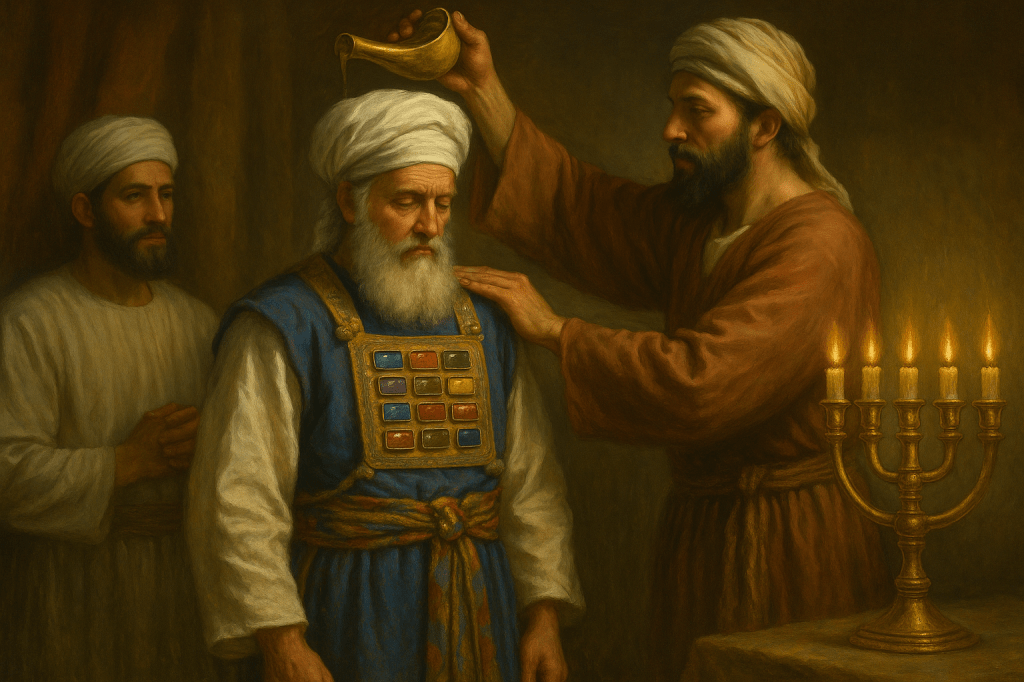
    “Then shalt thou take the anointing oil, and pour it upon his head.” – Exodus 29:7

    Only after blood and water comes oil. Anointing without purification breeds mixture. The Spirit descends where sanctification has made space.

    Many desire anointing but resist dying. Power flows through crucified vessels. Every oil requires a crushing first.

    The Consequence of Priesthood: Fellowship & Divine Indwelling

    “And I will dwell among the children of Israel.” – Exodus 29:45

    God’s presence is the reward of consecration. The priest is not just used by God; he becomes a host for His dwelling. Fellowship replaces performance; habitation follows obedience.

    The true mark of priesthood is not recognition but residence, God lives where He is honoured.

    • You cannot skip the altar and expect the anointing.
    • Purification precedes promotion.
    • Consecration is costly but it carries divine presence.
    • Ministry debt is paid through obedience and cleansing.
    • A “yes” without sanctification is noise; a consecrated “yes” carries fire.

    Declarations

    I yield to the full process of consecration.
    My life is washed, purified, and ready for divine use.
    Blood speaks for me, water renews me, and oil empowers me.
    The Lord dwells among me, I am His habitation.
    The price I pay becomes proof of the presence I carry.

  • Lessons from Exodus 28: Holiness and Leadership

    In Exodus 28, God shifts attention from the structure of worship to the stewards of His presence. Priests are set apart, not by status, but by garments of glory and beauty. This chapter reveals the sacred link between appearance, purpose, and anointing.

    God Chooses and Clothes His Priests

    “Take thou unto thee Aaron thy brother, and his sons with him… that he may minister unto Me in the priest’s office.” – Exodus 28:1

    Before Aaron could serve, he had to be clothed. In God’s system, calling is confirmed by consecration, and consecration requires proper covering.
    Your garment determines your access. God dresses His servants for the realm they are meant to function in. The physical robe symbolised a spiritual mantle, beauty revealing holiness.
    Priesthood is not performance but position, ordained, prepared, and properly clothed in righteousness.

    The Ephod: Bearing the Weight of Intercession

    “And thou shalt take two onyx stones, and grave on them the names of the children of Israel.” – Exodus 28:9

    Two onyx stones rested on Aaron’s shoulders, engraved with the names of the tribes. Each time he entered God’s presence, he carried Israel on his shoulders, the burden of a nation in prayer.
    The ephod represents intercession and responsibility. True leadership feels weight, not applause. You cannot carry glory until you’ve carried people.

    The Breastplate of Judgment: Wisdom on the Heart

    “And Aaron shall bear the names of the children of Israel in the breastplate of judgment upon his heart.” – Exodus 28:29

    Twelve gemstones symbolised twelve tribes: beauty matched with remembrance. The Urim and Thummim rested there, instruments of divine decision-making.
    God doesn’t trust His judgments to cold minds, but to warm hearts. Spiritual discernment flows from compassion wrapped in truth.
    To lead prophetically, your intellect must bow to your heart because love interprets revelation rightly.

    The Robe, Bells, and Pomegranates: Sound and Fruit

    “And upon the hem… a golden bell and a pomegranate, round about.” – Exodus 28:33–34

    Sound (bells) and fruit (pomegranates) alternated around the hem. The priest’s movement produced a melody, symbolising balance between gifts and character.
    Sound without fruit is noise; fruit without sound is hidden. God wants both the visible power of testimony and the silent witness of integrity.

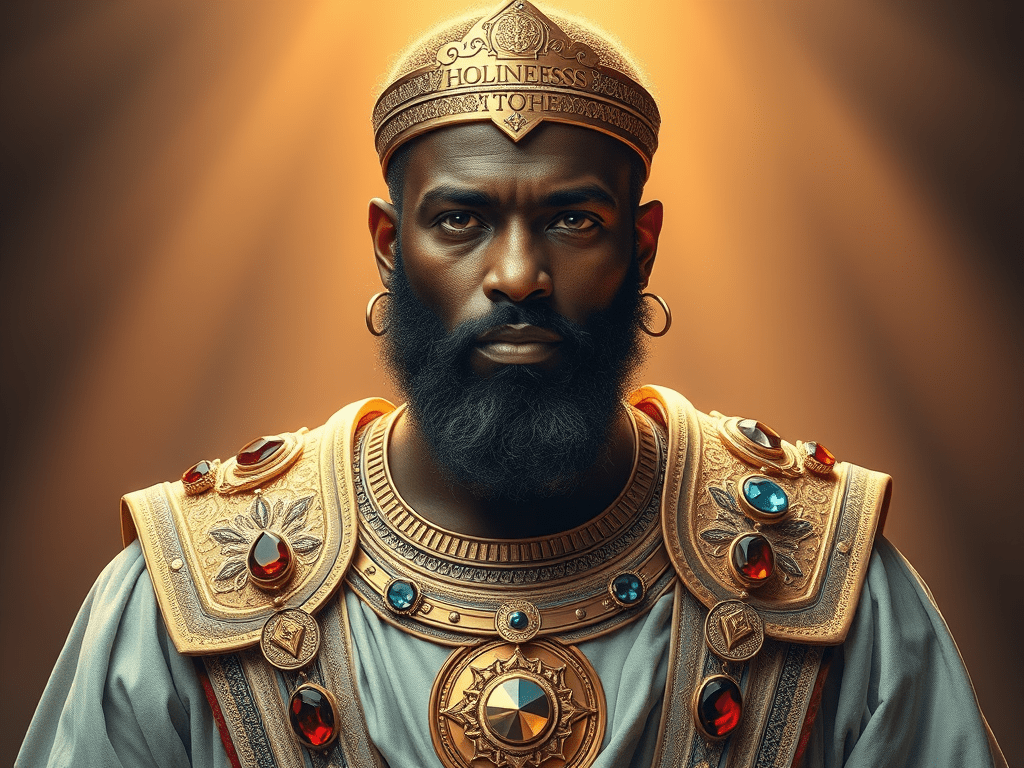
    The Golden Plate “Holiness to the LORD”

    “And thou shalt make a plate of pure gold… and grave upon it, like the engravings of a signet, HOLINESS TO THE LORD.” – Exodus 28:36

    The inscription rested on Aaron’s forehead, holiness visibly declared. It wasn’t a title, it was a reminder: the priest’s authority depends on purity.
    The higher you go in glory, the narrower the path of holiness. The head that wears the gold must also bear the discipline.

    Lessons for Today

    • You are clothed for calling not fashion, but function.
    • Leadership means carrying others before God with humility.
    • Discernment flows from a pure and tender heart.
    • Balance gifts (bells) with fruit (pomegranates).
    • Wear holiness as your crown; let consecration guard your thoughts.

    Declarations

    I am clothed with garments of glory and beauty.
    My priesthood is marked by holiness, wisdom, and compassion.
    I carry my family, community, and generation before God in prayer.
    Sound and fruit flow from my life, the gifts and character of the Spirit.
    The inscription of holiness crowns my mind; my life honours His name.
    I minister with weight, wisdom, and worship, clothed by God Himself.

  • Exodus 27 shifts the focus from inner holiness to visible witness. God gives instructions for the Bronze Altar, the Courtyard, and the Oil for the Lamp: three symbols of consecration, community, and continual light. This chapter teaches that public worship must mirror private fire.

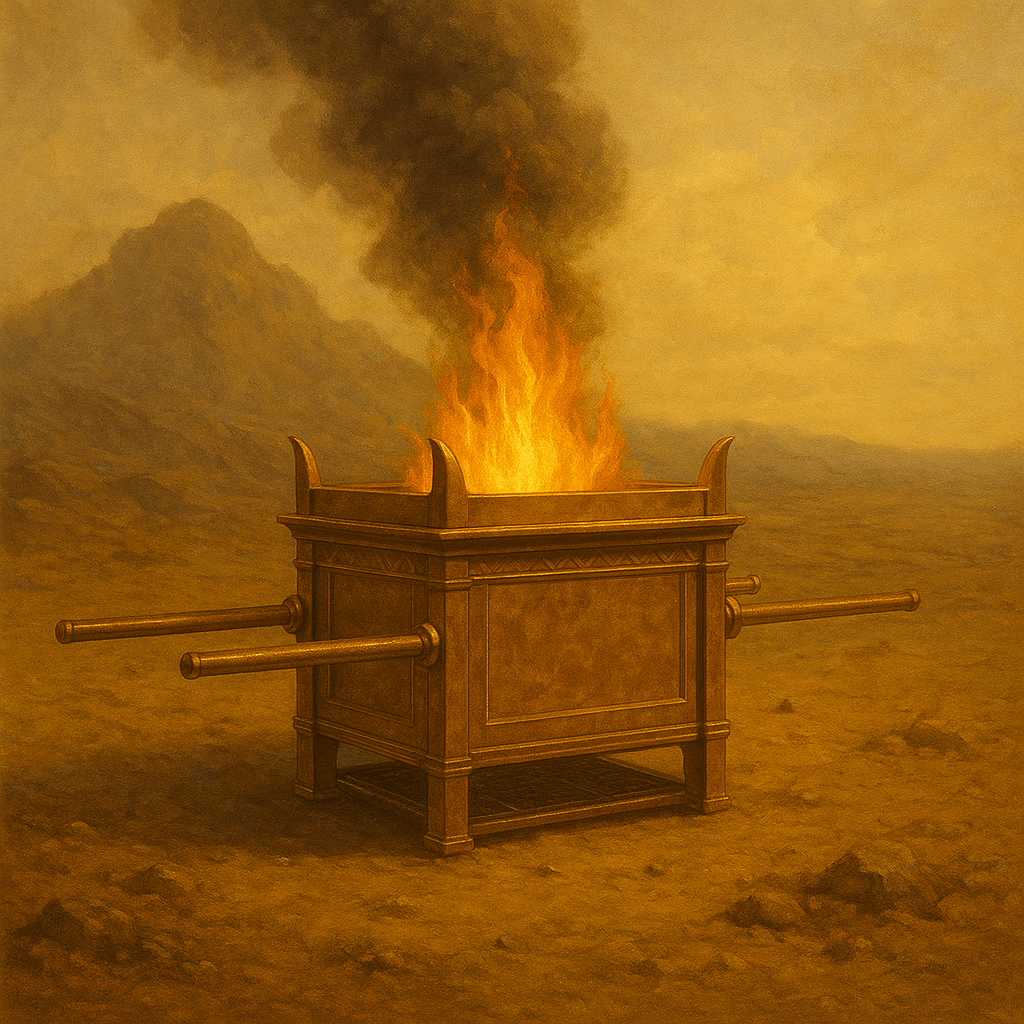
    The Bronze Altar, Fire That Consumes Flesh but Saves the Soul

    “And thou shalt make an altar of shittim wood, five cubits long, five cubits broad… and overlay it with brass.” – Exodus 27:1–2

    The altar is where heaven meets the dust of man. Every sacrifice dies here so that life may begin again. Its bronze covering speaks of judgment, the price of atonement.


    Before you enter the Holy Place, you must pass the altar. No fire of revelation can burn in your lamp if the fire of surrender hasn’t burned on your altar.
    The altar consumes ego, pride, and comfort. Its flames purify motives and transform weakness into worship.

    The Courtyard: Boundaries of Holy Fellowship

    “The court of the tabernacle shall have hangings of fine twined linen…” – Exodus 27:9

    The courtyard was open to all Israel, a visible zone of approach to God. White linen surrounded it, symbolising righteousness.

    Purity defines access. The courtyard teaches that holiness is not isolation but ordered access. Everyone can come near, but not everyone can dwell deep, proximity requires purity


    Let your life’s boundaries be linen walls, visible righteousness, quiet strength, and separation without arrogance.

    The Oil for the Lamp: A Flame That Never Sleeps

    “Command the children of Israel, that they bring pure oil olive beaten for the light, to cause the lamp to burn always.” – Exodus 27:20

    This light must never go out. It represents constant communion, prayer, revelation, and presence. The oil was beaten, not pressed, signifying that true illumination flows from crushed surrender.
    The altar provides fire, but oil sustains light. Fire cleanses; oil preserves. Without the two, ministry becomes noise without flame.

    The Symbolic Flow: From Altar to Lamp

    1. Sacrifice at the altar (surrender).
    2. Sanctification in the courtyard (discipline).
    3. Sustenance by the lamp (communion).

    Every revival follows this order: sacrifice births consecration, and consecration sustains illumination.

    Lessons for the Believer

    • Your public altar must reflect your private obedience.
    • The courtyard of your life should be clothed in integrity.
    • The lamp of your spirit must never flicker from neglect.
    • Fire and oil are not seasonal; they are daily commitments.

    Declarations

    I am a living altar my fire never goes out.
    Every sacrifice I offer births new dimensions of glory.
    My courtyard is covered with linen; my righteousness speaks silently.
    The oil of my spirit flows continually, feeding the eternal flame within me.
    I walk in the light that never dies, and my worship becomes a habitation for God.

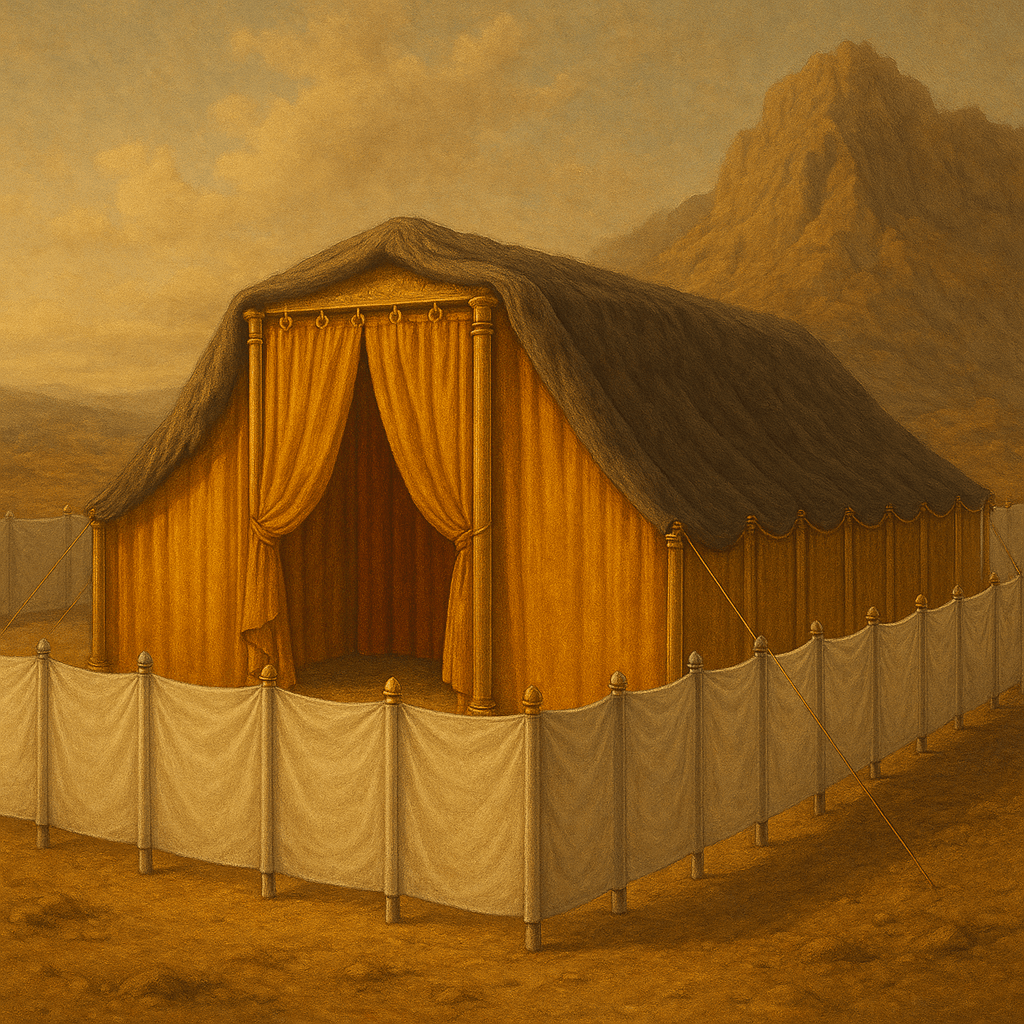
  • Exodus 26 unveils the architecture of God’s dwelling, the inner framework of divine presence. Every curtain, clasp, and board is a prophecy in fabric and wood. God doesn’t just want to be near His people; He wants to live within them through ordered beauty.

    Layers of Glory: The Curtains of Revelation

    “Moreover thou shalt make the tabernacle with ten curtains of fine twined linen, and blue, and purple, and scarlet…” – Exodus 26:1

    Each colour represents a mystery:

    • Blue: Heaven’s dimension: divine authority and revelation.
    • Purple: Royalty and priesthood: communion between heaven and earth.
    • Scarlet: Redemption through blood: the access code of mercy.
    • Fine Linen: Purity: the righteousness that carries presence.

    Insight: The more you study the layers, the clearer you see that God hides glory behind discipline. The outer coverings were rough (goat hair, ram skin dyed red), but the inner layer was exquisite. Holiness begins inward and radiates outward.

    The Boards and the Rings: Structure of Stability

    “And thou shalt make boards for the tabernacle of shittim wood standing up.” – Exodus 26:15

    The boards, made of acacia (shittim) wood, symbolize believers, ordinary yet durable, standing upright by grace. Each board is joined by rings and bars, showing divine unity.
    No board stands alone. The presence of God requires connection.

    God doesn’t dwell in scattered brilliance but in unified order. Every redeemed life becomes a board in His spiritual house. The glory rests on alignment, not ambition.

    The Veil: Boundary and Bridge “And thou shalt make a veil of blue, and purple, and scarlet, and fine twined linen: with cherubims shall it be made.” – Exodus 26:31

    This veil separated the Holy Place from the Most Holy Place, a visual of distance between humanity and divinity. Yet when Christ died, this same veil tore in two (Matthew 27:51).
    The barrier became a bridge.

    Insight: The veil was beautiful yet restrictive, glorious yet guarded. Some seasons of separation are not punishment but preservation, God conceals what He is perfecting.

    God’s Dwelling Has Design

    Everything has dimension and measurement.
    The Tabernacle reveals that God’s glory has geometry, specific, exact, and sacred. Moses couldn’t improvise. The divine instruction was: “See that thou make it after their pattern, which was shewed thee in the mount.”

    You can’t substitute revelation with creativity. Patterns sustain presence. What God gives in vision must be executed in precision.

    The Inner Voice of the Tabernacle

    Each piece whispers:

    • “Cover me” : Mercy.
    • “Join me” : Unity.
    • “Lift me” : Obedience.
    • “Guard me” : Consecration.

    Prophetic Thought: The Tabernacle was not about furniture, it was a map to host God on earth. It’s an invitation for every believer to become a living tent of divine encounter.

    Declarations

    I am a dwelling place of God’s presence, not a monument of religion.
    Every layer of my life aligns with heaven’s pattern.
    My inner life reflects divine order and beauty.
    The veil is torn; I have access to the Holy of Holies.
    I am joined, strengthened, and positioned for glory.
    God’s pattern governs my process, and His presence fills my house.

  • In Exodus 25, God begins to reveal His architectural heart, a pattern of how heaven can dwell among men. The wilderness becomes a construction site for divine presence. Every detail of the Tabernacle is intentional, representing both the mystery and intimacy of God’s dwelling.

    The Willing Offering: Worship That Costs Something

    “Speak unto the children of Israel, that they bring Me an offering: of every man that giveth it willingly with his heart ye shall take My offering.” – Exodus 25:2

    Worship begins with willingness, not wealth. God didn’t ask for what they didn’t have; He asked for what they valued gold, silver, linen, spices.

    Insight: True giving is not measured by the item but by the surrender it represents. God measures weight in willingness. Every offering that births glory must cost something of self.

    The Pattern of the Sanctuary

    “And let them make Me a sanctuary; that I may dwell among them.” – Exodus 25:8

    This is the first time God speaks of dwelling among His people. The Tabernacle isn’t just a tent; it’s the manifestation of intimacy through order. The structure of worship mirrors the structure of heaven.

    The sanctuary is a prophetic shadow of Christ, God tabernacled in flesh. Every board, curtain, and lamp points to a heavenly reality now revealed in us through the Holy Spirit.

    The Ark of the Covenant: Throne of Mercy

    The first item God commands to be built is not the altar or the lampstand, but the Ark: His throne of presence. It represents:

    • Covenant (the tablets inside),
    • Provision (manna),
    • Priesthood (Aaron’s rod that budded).

    Above it, the mercy seat, a golden lid overshadowed by cherubim, becomes the meeting point of mercy and judgment.

    Insight: God starts building from the inside out. Before He shapes our ministry, He establishes His throne in our hearts. The Ark is a reminder that presence precedes power.

    The Table & the Lampstand: Fellowship & Illumination

    • Table of Showbread: constant communion, God feeding His priests daily.
    • Golden Lampstand: divine illumination, sevenfold Spirit of God lighting the holy place.

    Reflection: Bread without light becomes religion. Light without bread becomes pride. The Word and the Spirit must coexist in balance for glory to dwell continually.

    The Blueprint of Divine Precision

    God tells Moses: “See that thou make them after their pattern, which was shewed thee in the mount.” – Exodus 25:40

    Patterns preserve presence.
    When you copy heaven’s design, heaven honours your space with its glory. Disorder repels divine habitation; precision invites it.

    Principle: The Spirit is creative, but never chaotic. His flow always has form.

    Declarations

    I give willingly, and my offering becomes a fragrance before God.
    The pattern of heaven governs my life, home, and ministry.
    The Ark of God’s presence rests in me; mercy speaks louder than accusation.
    My bread never runs out, and my lamp never goes dim.
    I build by revelation, not imitation, my life becomes His dwelling place.
    I am the sanctuary where heaven finds rest on earth.

  • In Exodus 24, the covenant between God and Israel moves from words to reality. What began as laws on stone now becomes blood on the altar. Heaven meets earth. This is the chapter of sealing, consecration, and glory.

    Covenant Confirmed: The People Say “Yes”

    Moses, Aaron, Nadab, Abihu, and seventy elders are called up to meet God. Before ascending, Moses builds an altar with twelve pillars, one for each tribe. He sprinkles half of the blood on the altar (representing God’s side) and half on the people (their agreement).

    Israel declares:“All that the LORD hath said will we do, and be obedient.” – Exodus 24:7

    Covenants are not sustained by emotion but by alignment. The power of agreement is what gives spiritual transactions their legality. Every “Yes, Lord” must be sealed with obedience, not sentiment

    Spiritual Principle: Before glory appears, blood must speak. The altar is the courtroom where destinies are ratified.

    Seeing the God of Israel: Encounter in Glory

    The elders ascend and behold the God of Israel. Under His feet, there appears a pavement like sapphire, clear as the heavens. They eat and drink in His presence.
    True encounters with God bring communion, not chaos. Revelation without fellowship becomes pride. But here, the elders dine before God, glory and intimacy side by side.

    The sapphire pavement represents clarity, transparency, and divine order. The higher you go with God, the more your motives must be pure, your heart like glass before His throne.

    Moses Called Higher Into the Cloud

    God calls Moses alone: “Come up to Me into the mount, and be there…” – Exodus 24:12

    For six days, the cloud covers Mount Sinai. On the seventh day, God calls Moses from within the glory. The sight below looks like consuming fire. Moses enters and remains forty days and forty nights.

    Every covenant dimension demands isolation. The call to “come up” always separates. The first six days purge the soul; the seventh day opens the spirit. Divine trust is tested in waiting.

    When men see fire, prophets see invitation. The same cloud that hides God from the crowd reveals Him to the called.

    The Blood, the Book & the Voice

    Moses reads the Book of the Covenant aloud, word and blood in perfect union. This pattern mirrors Christ’s eternal covenant:

    • The Word: God’s legal document
    • The Blood: Heaven’s signature

    Every revival starts with a return to both. Scripture without sacrifice produces knowledge; sacrifice without Scripture breeds error.

    Lessons for the Spirit-Led Believer

    • Obedience seals what prayer begins.
    • Glory does not rest on rebellion.
    • You cannot eat at His table and still dine with idols.
    • The blood gives access; the cloud gives authority.

    Many want the sapphire pavement but reject the altar of blood. There is no shortcut to glory. Every new height requires a new death.

    • The Blood: Points to Jesus, mediator of a better covenant (Hebrews 12:24).
    • The Cloud: Symbol of divine habitation, the Holy Spirit’s presence.
    • The Mountain: Process and separation before manifestation.
    • The Sapphire Floor: The realm of revelation where mysteries become light.

    Declarations

    I am part of a sealed covenant by the Blood of Jesus.
    My altar speaks louder than accusation.
    I ascend the mountain of revelation, pure, steady, and unashamed.
    The cloud covers me; the fire refines me.
    I will see the God of Israel and live to declare His glory.
    I dwell in the secret place where the covenant is confirmed.
    The voice that called Moses now calls me higher into purpose, power, and purity.

  • In Exodus 23, God continues to teach Israel how to live as a holy nation, not just spiritually, but socially, legally, and morally.
    Three major themes dominate this chapter:

    1. Justice & Compassion in Community
      • Do not spread false reports.
      • Do not follow crowds to do evil.
      • Do not deny justice to the poor.
      • Return your enemy’s ox or donkey if it wanders.
      • Help even the one who hates you when they are in trouble.
    2. Sabbath & Sacred Rest
      • Work six days, rest on the seventh.
      • Let your land rest in the seventh year, so the poor and animals may eat.
      • Keep the feasts: Unleavened Bread, Firstfruits (Harvest), and Ingathering (Tabernacles).
    3. God’s Angel & Divine Protection
      • God promises to send an Angel (Messenger) before them.
      • This Angel carries God’s Name, authority, and power.
      • God warns: “Do not provoke Him, for He will not pardon your transgressions.”

    “Behold, I send an Angel before thee, to keep thee in the way, and to bring thee into the place which I have prepared.” Exodus 23:20 (KJV)

    “I will be an enemy to your enemies and an adversary to your adversaries.” Exodus 23:22

    A covenant of protection, provision, territory, health, and inheritance is established.

    Destiny Needs Order, Not Emotion

    God ties spiritual authority to justice, truth, and obedience.
    You cannot pray like Moses and lie like Jacob, purity gives your voice power.

    “Before God sends angels to fight for you, He checks if your life agrees with His truth.”

    Angelic Government & Covenant Pathways

    This Angel is not a normal messenger, many believe this is the Pre-Incarnate Christ (The Angel of the Lord).
    He carries God’s name and judgment.
    If Israel obeys, He will:
    ✔ Drive out nations gradually
    ✔ Set boundaries
    ✔ Bless their bread, water, health, and wombs (v. 25–26)

    But, no covenant, no covering.

    Compassion is Warfare

    God says:

    • Return your enemy’s animal when it’s lost.
    • Help your enemy’s donkey when it collapses.

    This is kingdom paradox.
    Compassion disarms darkness.
    Why? Because love reflects God, and hell cannot copy it.

    • Spirituality is not how high you jump in worship, it’s how straight you walk in justice.
    • Don’t mistreat strangers, you were once one.
    • Rest is prophetic obedience, Sabbath is warfare against burnout and pride.
    • Angelic help is real, but obedience attracts it, rebellion dismisses it.
    • God won’t drive away enemies in one day, process protects you from pride and unpreparedness.
    Declarations
    1. I walk in justice, truth, and compassion, my life agrees with God’s throne.
    2. I receive the ministry of God’s Angel, to lead, guard, and bring me into destiny.
    3. Enemies of my purpose become enemies of God, He fights for me.
    4. My bread and water are blessed, sickness is far from me and my family.
    5. Little by little, I conquer, and I possess every territory God has ordained for me.

BeKemified – Pampered. Prepared. Positioned.

Pampered by Grace. Prepared by Truth. Positioned for Glory.

Skip to content ↓